
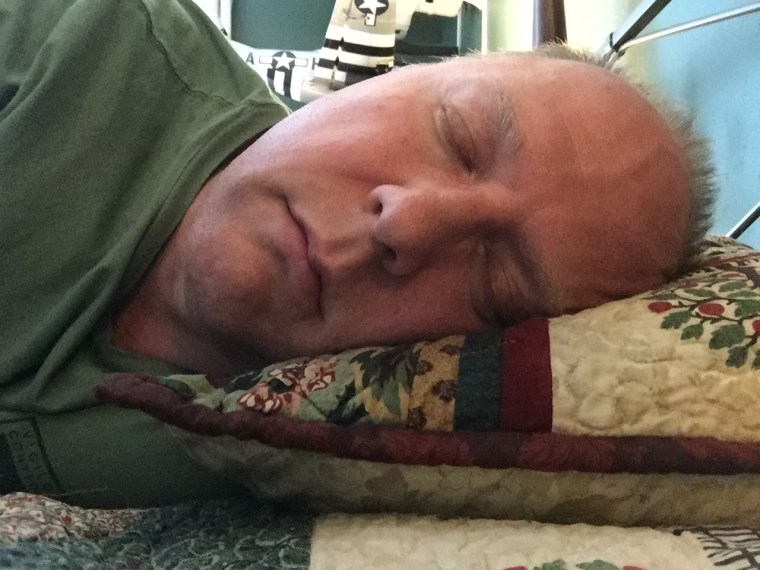
One factor in weight loss and improving my health that I’ve overlooked in the past has been sleep, or rather, getting the right amount of sleep. It’s a part of any weight loss program that is rarely discussed. In the past ten months, I’ve kept track of my sleep with a Fitbit Surge, and I’ve been able to reliably track down the times I’m not losing weight by looking at some inputs: How much food did I eat, what type of food did I eat, how much physical activity did I do, and how much sleep did I get? These four factors make up the formula for successful weight loss.
(Food volume+food type)2 – physical activity (-sleep amount)2 = weight loss
We’ll call that the PaleoMarine Formula for Weight Loss (I put it into some fancy formula formatting because it looks pretty cool). I’m certain that the real formula is far more complicated and takes into account far more factors, but for our purposes here, these are the factors we have under our control and that most greatly affect our weight loss success. In order of importance, they are:
- Food type
- Food volume
- Sleep
- Physical activity
Just like with any formula, if you throw in a bad value into any of the variables, you will get weird or bad results. The same is true in weight loss. If you eat a reasonable food volume, eat good food, and get in some physical activity but not enough sleep, your body will not lose weight as well or as quickly. If you get lots of sleep and physical activity but eat a lot or eat bad foods, you won’t lose weight. Food volume and food type are the more important parts of this formula, in my experience.
How much sleep is right for you? That depends on many factors including your age and sex. I’ve found that for me, while 6.5 hours of sleep is enough for me to feel rested, I don’t lose weight unless I sleep for at least 7 to 7.5 hours a night regardless of how well I ate the day before. My non-scientific reason for this is that sleep deprivation greatly affects what happens to the food you eat the day before on a metabolic level.
According to PaleoLeap:
Study after study has shown that if they’re allowed to choose their own diet, sleep-deprived subjects will eat more food, especially more junk. Assuming you aren’t living in a metabolic ward, you too have the ability to choose your own diet – and you too will likely go for the “comfort food” in the face of sleep deprivation. Specifically, sleep deprivation is a huge risk factor for sugar cravings and overeating high-carb junk food (think cookies, pretzels, pasta bowls…)
As for sleep and metabolism, PaleoLeap has this to say:
- Reduces insulin sensitivity. Insulin sensitivity is the metabolic capacity to handle eating carbs – to use them for energy, instead of storing them as fat. A reduction in insulin sensitivity means that you’re more likely to store food as fat (and then still be hungry afterwards).
- Changes the composition of the gut flora. Nobody is totally sure yet exactly what the relationship is between the gut flora and obesity, but we know there is one.
- Creates inflammation. In this study, for example, either sleeping 5 hours a night or sleeping at the wrong time (the shift work pattern) increased markers of inflammation. This study makes it even clearer: “sleep deficient humans…exhibit a proinflammatory component; therefore, sleep loss is considered as a risk factor for developing cardiovascular, metabolic, and neurodegenerative diseases (e.g., diabetes, Alzheimer’s disease, and multiple sclerosis).” Nothing that promotes diabetes is helping you lose weight.
It’s interesting to see that sleep deficient humans exhibit a proinflammatory component: I find that my fingers are puffy when I don’t get enough sleep. Now I know why! Perhaps I can use that as another indicator as to whether I get enough sleep the night before or not. I will start checking the fit of my wedding ring in the mornings after sleeping to see if I can collaborate this as well.
Adopting a Paleo lifestyle is a change. Part of that change should be getting enough sleep. Some things you can do are:
- Set a “Do Not Pass” time for when everything is done at night. Do not go past this time with any tasks. This leads to the next step.
- Set a bedtime and stick to it. I did this, and it’s helped me get more sleep every night.
- As part of that bedtime, have a routine that you stick to. Mine is to make sure the doors are locked, lights are off in the house, and once in my bedroom, I make sure things are laid out so I can find them easily in the morning as efficiently as possible. I then raise the back of my bed slightly (helps eliminate snoring for me) and then I turn out the lights as I tuck myself into bed.
- During the bedtime routine, eliminate electronics device usage. Studies have shown that using electronics before bed can cause you to not get good rest.
I know, we feel like we need to finish things before we go to bed, and many of us don’t want to keep putting things off, but perhaps look at how much you procrastinate earlier in the day. If you find that you put things off earlier in the day to try to get them done before you go to sleep, perhaps start writing lists of To-Do’s so you can tackle these tasks earlier in the day to allow yourself an earlier bedtime.
Some people (myself included) have medical issues that can preclude them from getting a good night’s sleep. I had sleep apnea and used to wear a CPAP at night to get a good night’s rest. I believe my weight had a lot to do with my sleep apnea as now that I’ve lost the weight, I don’t snore or suffer from sleep apnea anymore. However, there are lots of people who are not aware they have medical issues that keep them from getting a good night’s rest. If you do all of the above steps to try to ensure that you get a good night’s rest and you still can’t, perhaps speak with your doctor or physician’s assistant to see if you qualify for a sleep study to try to identify the reason(s) for your lack of quality sleep.
Get enough sleep. Make time for it. I know you’re busy, and I know you have stuff to do. We all want to get as much done in a day as possible, but sleep is important to our overall health.
Current stats:
Weight: 190.5 lbs (Started 289.9 lbs on 9/1/15)
Body fat: 20.2% (Started 47% on 9/1/15)
BMI: 29.9 (Started 45.4 on 9/1/15)
 Paleo Marine
One thought on “Sleep: The Overlooked Variable in the Weight Loss Formula”