
Majority of America’s Young Unable to Serve due to Excessive Weight?

simplyhdr56141990-1
This 50 year-old soldier is healthier than 71% of America’s youth.

A story on Military.com about the Army’s desire to change its culture of health and fitness had a frightening statistic in it.

A recent Heritage Foundation report found that, according to 2017 Pentagon data, “71 percent of young Americans between 17 and 24 are ineligible to serve in the United States military.” Nearly one-third of those young Americans are too overweight for military service.

“Put another way: Over 24 million of the 34 million people of that age group cannot join the armed forces — even if they wanted to,” said retired Lt. Gen. Thomas Spoehr and Bridget Handy, who authored the report, “The Looming National Security Crisis: Young Americans Unable to Serve in the Military.”

As a soldier and a former active duty Marine, this frightens me. This is the pool from which my future troops will come from, and unless something changes, the Army will have to do one of two things: lower recruitment standards to allow overweight recruits into the Army and then have to work to get them into height/weight standards, or find a way to do what we are tasked with doing today with fewer people. The latter is untenable. The former may be the only solution.

What I don’t understand is why the Army doesn’t address the problem in basic training by teaching recruits to eat properly. Afterall, getting them fit is easy, but getting them to lose weight to improve their health won’t happen on the current diet that is fed to recruits: high carb, low fat. It’s actually the exact opposite of what would help these young Americans be able to serve their country.

The Height of Rudness

mehTelling an overweight person to eat less and move more is exactly like telling a person who suffers from depression to cheer up. It’s literally just that bad. I heard someone today tell an overweight person to just eat less and move more today, and the look on the girl’s face said it all; she was embarrassed and hurt. I interjected and told the person offering the advice that there was a lot more to it than that, and that it really isn’t anyone’s business but their own. They tried to laugh it off, but really, it’s no laughing matter.

People used to give me this advice all the time when I was obese, and it felt so insulting, embarrassing, and made me feel like a failure. Of course eating less would really help me lose weight.  I felt like I had failed life, that I had failed on fulfilling one of the most basic human needs properly: eating enough, but not too much. I had tried so often and failed, and yet here are all these people who somehow were keeping it together, eating food, and staying thinner than I was. I obviously didn’t know what I was doing.

The problem is that we aren’t taught the right way to lose weight easily and safely, and it seems so out of reach for those of us who are obese. Low-carb/High-fat (LCHF) was the method I found that worked for me. There are many ways for people to get healthy and to lose weight, and I implore you to find what works best for you. I hope that the rude people don’t discourage you and don’t keep you from finding the path that leads you on your own journey to good health. It’s so worth it. You’re so worth it.


What makes it hard?

preppedThere are some things I will admit are not easy to do when adopting the Paleo Diet, a ketogenic diet, or doing a Whole30. They are:

  1. Food prep. This is a big one, and may be the biggest obstacle for most people I talk to. The concepts of eating low-carb/high-fat is easy enough, and while it’s something a lot of people don’t really want to do, it’s something they eventually recognize they have to do. However, to stay on the straight and narrow, it requires more work than the standard American diet. You can’t just go to any fast food restaurant and order Paleo or keto-friendly foods without some picking and choosing and possibly even modifying. So, food prep is a way of life. It can be as easy as using two or three slow cookers and an oven to prep to actively cooking three or four meals which can take all day. My wife does our food prep on Sundays; some days are fast and easy while others keep her (and I) on her/our feet all day. It just depends on how dandy we want our food to be, and whether the food requires a lot of steps or is as easy as smoking a rack of ribs.
  2. Purchasing foods and getting used to looking closely at labels. This is another obstacle to eating well: shopping and reading. It requires a certain vigilance to really find the forbidden ingredients in foods. Did you know they put soy in tuna fish? Or most sausages and even bacon have sugar in them? These foods can do without those ingredients, yet they’re placed there by food makers. Sherry and I read every label of every food item we purchase that has been even slightly processed like sausage or bacon. We try to stick with whole meats and vegetables, but there are times when some Italian sausage or a chorizo is what a recipe needs, so we have to find the best/healthiest version. Also, sticking with healthy, whole foods can seem to be more expensive, but when you consider that you actually eat less volume of good, whole foods, it ends up not only not being more expensive, but can actually save money in the long run.
  3. Whole30/Keto Flu. This is a big one for anyone who is going from the standard American diet to a low-carb diet. The symptoms can last from 1 day to 2 weeks depending on how much sugar a person used to consume in their diet. The symptoms can be reduced when adopting a ketogenic diet by taking exogenous ketones, but when going Paleo or doing a Whole30, the only way through it is to bear down, use as much motivation as possible, and eat a handful of nuts every now and then to get past the cravings. After a few days to a few weeks, it will improve, and the cravings will disappear.
  4. Changing your mindset and accepting that you don’t have to be suffering to get healthy and lose weight. This was difficult for me to get past. As I was losing 10-12 lbs/month without suffering, I thought I was doing something wrong. Even as I was succeeding, I felt like I wasn’t doing enough. I felt like I somehow should be doing more, eating foods that weren’t as tasty or that didn’t make me feel so full. I never counted calories yet I ate delicious foods, felt full after meals, and didn’t have cravings in between them. Because I was so conditioned to suffering for weight loss, I felt guilty the whole time. I took almost a year for that feeling to go away.
  5. Other people. Some offer advice when they don’t understand the low-carb/high-fat diet. When people see me eating a meal with meat, bacon, fats, and such, they tell me I should really watch what I’m eating or I’ll gain weight. They don’t understand that it’s that very food that has allowed me to lose over 150 lbs and regain a healthy life. They mean well, so I’m never hostile about it, but when I try to explain to them that I know what I’m doing, some persist. Some have gone so far as to tell me that I’m wrong, and that I’ll gain all the weight back and then some. A smaller percentage are jealous of my success, and have tried to either sabotage me or have decreased contact with me because of how my success makes them feel about their own failures. It’s okay; I know it’s them, and not me.

I’m sure there are other difficulties that people face, but these were my top 6. With all that said, however, I can’t say enough about the improvements in my life since adopting LC/HF. I’ve posted many times in the past about the ways in which my life has improved and changed, and I can’t ever let myself go back to being overweight, let alone obese.

People Will Understand

file (2)A lot of people find themselves in situations where everyone is imbibing alcohol or high-carb foods at social events, and they feel pressured to partake. When I was on Paleo, that wasn’t typically such a big deal; my body could handle a meal and a little alcohol with aplomb, and recovery time was typically pretty light. On keto, however, this can be more problematic. One glass of an alcoholic beverage coupled with a slice of pizza can throw my body out of ketosis and force me to have to work on getting back into ketosis that could take up to a week.
How do you tell people that you don’t want that glass of beer or that slice of pizza? I’ve found it to be pretty easy: I just politely say, “No, thank you.”

You may get a few quizzical looks or a question about why, but typically, polite people smile and move on to the next person. In rare cases, I’ve been asked more specifically if I’m on a certain diet or if I have some health issue precluding me from imbibing what’s being offered, and depending on who is asking and the setting, I’ll either just say, “No, thank you,” or I’ll explain that I’m on a diet that restricts the type of food I’m on. If they persist and ask why, I will reply with, “For my health.” And I leave it at that.

I’ve not had anyone really get upset or feel insulted, contrary to what I expected when I first started eating well. I have been very surprised with how understanding and supportive most people are, and on the rare occasion when someone doesn’t truly understand, I just smile and let the awkward silence tell it all.

Don’t feel forced to eat bad food. Don’t feel like a social situation makes it imperative for you to eat foods you don’t want to eat, or drink what you don’t want to drink. It’s ultimately up to you, within your power, and you are armed with the words, “No, thank you.”

Chidhood Obesity; It’s Only Getting Worse

002
My sister, my mom, me, and my dad in 1973.

From a story today on NPR.org:

The latest analysis shows that the percentage of children ages 2 to 19 who are obese increased from 14 percent in 1999 to 18.5 percent in 2015 and 2016.

What’s most striking to me is that not only are things not getting better with all this emphasis on low-fat, but that for children aged 2-5, it’s getting worse.

In fact, the scientists say, there was a disturbingly large increase in obesity among the youngest children — ages 2 to 5 years old. In that age group, obesity increased from about 9 percent to almost 14 percent.

How does this happen? Think of all the foods that are marketed to kids, towards kids, and towards parents feeding kids in the easiest way possible. While the expert cited by the article believes that lack of access to healthy foods and a lack of exercise are the reasons to blame for this increase, I think that it is more of a societal issue than that. We are increasingly turning toward convenience over quality in every aspect of our lives, from mobile devices that are designed to be disposed of instead of repaired to the food we eat.

We need to turn back to the days when a well prepared meal was the norm, not the exception. When I was a kid, I had fast food only when my mom could either not take the time to make food due to activities or an emergency, and even then, it was probably once every few weeks (at most). Contrast that with the average family today that dines out 5-6 times a week (either drive-through, dine-in, or bring-home). That’s a lot of bad food being consumed.

Exercise for kids is important, and I highly recommend forcing kids to play outdoors instead of allowing them to sit on computers or console gaming devices all day, but the largest factor in weight gain is poor quality food. They say we take time and care to do things for those we love. Take the time and care to prepare your kids a good, wholesome dinner made with real ingredients. Don’t cheap out on them, and don’t cheat them out of your love and care. Give them a solid foundation of good food health which will translate into a long and healthy life which is all we want for our kids.


In Optimal Ketosis

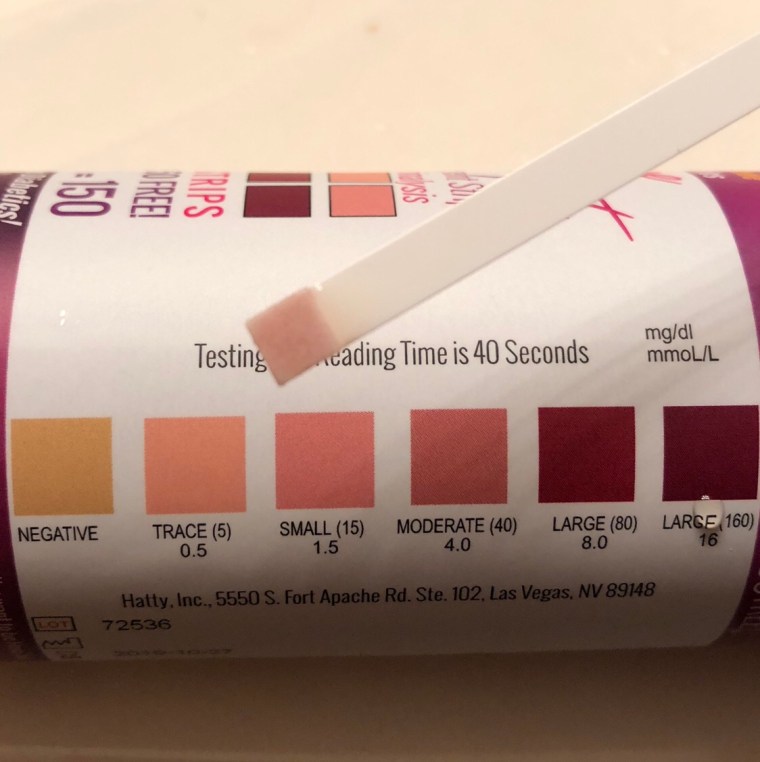
img_1460
This is an older photo; this morning’s stick was between moderate and large, actually.

So, on a whim last night and again this morning, I checked my Keto level with some ketostix to see where I’m at. It measured at around 4.0 mmol/L. That’s just a tad higher than what’s considered optimal, but that’s because my body hasn’t yet fully adapted to using the ketones in my blood as fuel. It’s burning fat now, but not as efficiently as it can once it gets used to this instead of glucose.

How do I feel? Really good! I sleep better, I feel more energized still, and I feel better able to focus. I don’t forget why I entered a room anymore, and it’s easier for me to complete tasks without getting sidetracked (or forgetting why I started doing something!). No, I wasn’t going senile, but concentration has been a difficult thing for me in the past.

My weight was up a tiny bit this morning, but if I’ve learned anything in the past two and a half years of eating clean is that weight fluctuations of 3-5 lbs is pretty normal due to water retention. I am pretty sure that I didn’t really gain any weight last night.

I have to say that going from a Paleo diet to Keto was pretty easy and painless. I read a lot and heard a lot of the “Keto Flu,” but either because my body was already used to low-carb or because I aided my transition into Keto with exogenous ketones. Either way, I am happy with how quickly my body got into ketosis, and I’m happy with the results in not just my weight, but in how I feel and how my clothes are fitting now.